


GROOVY SCRIPT
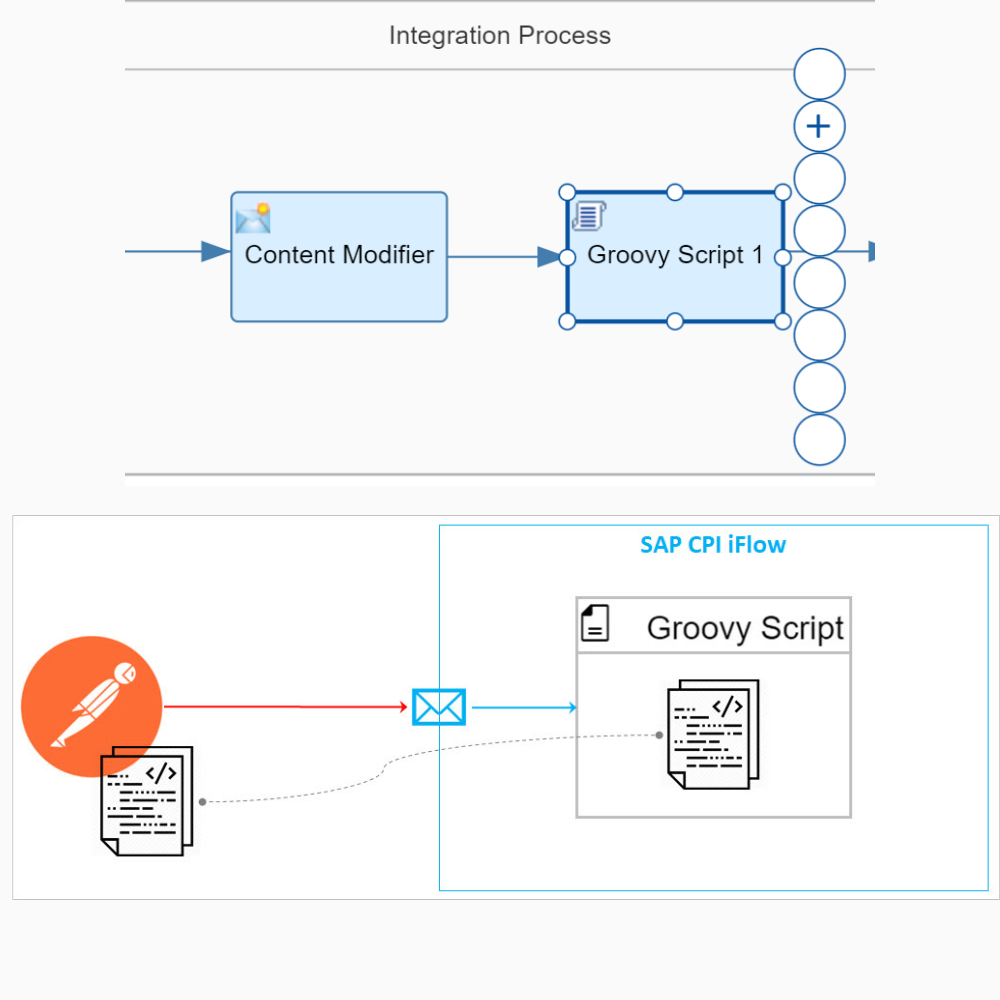
In the context of SAP Cloud Platform Integration (CPI), Groovy scripting refers to the use of the Groovy programming language for writing custom scripts within integration flows.
SAP CPI allows users to enhance and customize integration flows using Groovy scripts to perform specific tasks or implement logic that may not be achievable with standard configuration options.
Groovy is a versatile scripting language for the Java Virtual Machine (JVM) that combines features from languages like Java, Python, and Ruby. It is often used in various scenarios, including scripting within SAP CPI integration flows.
Here are some common use cases for Groovy scripting in SAP CPI:
- Data Transformation: You can use Groovy scripts to manipulate and transform data within the integration flow. This may include data mapping, splitting or merging messages, and performing calculations.
- Dynamic Content Manipulation: Groovy scripts allow you to dynamically generate or modify content based on runtime conditions, providing flexibility in adapting to different scenarios.
- Custom Header/Footer Processing: Groovy scripts can be used to add custom headers or footers to messages, providing additional information or meeting specific requirements of target systems.
Advantages of Groovy Script
Flexibility and Expressiveness:
Groovy is known for its flexibility and expressiveness, making it relatively easy to write concise and readable code. It supports a dynamic typing system, making it suitable for scripting tasks.
Integration with Java:
Groovy is designed to seamlessly integrate with existing Java code. This is beneficial in SAP integration scenarios, where Java is often used. You can leverage existing Java libraries and classes in Groovy scripts, allowing for a smooth transition and reuse of code.
Script-Based Transformations:
In SAP Cloud Platform Integration, Groovy scripts can be used for mapping and transforming data between different formats and structures. This flexibility is crucial in scenarios where standard mapping tools might not provide the required customization.
Support for JSON and XML Processing:
Groovy has built-in support for handling JSON and XML data, which is often prevalent in integration scenarios. This makes it convenient for processing and manipulating data in these formats.
- Jaspreet. 2023. Examples of Groovy Script in SAP Cloud Integration. Available: https://www.abusinesstech.com/post/examples-of-groovy-script-in-sap-cpi.
- vikas_jangid78, SAP Community Participant. 2021. Understanding Groovy Scripting for SAP Integration Suite - Part 1 . Available:https://community.sap.com/t5/technology-blogs-by-members/understanding-groovy-scripting-for-sap-integration-suite-part-1/ba-p/13516456
- Pizug. 2024. Cloud Integration Groovy Examples. Available: https://pizug.com/cpi-groovy-examples/