
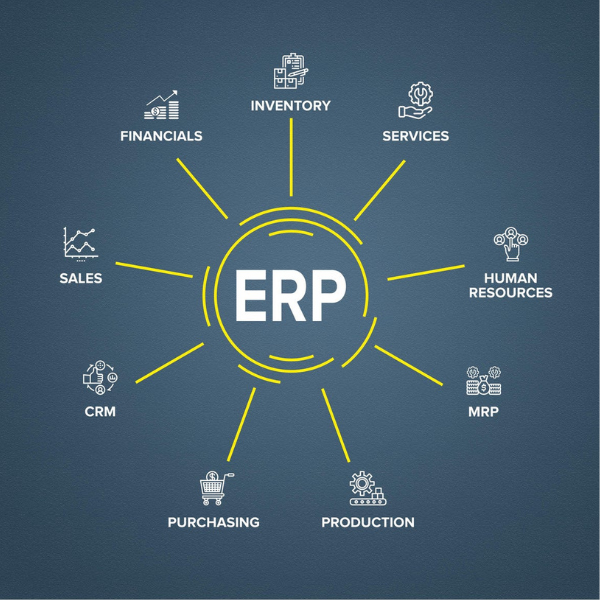

The Future of ERP
ERP software has been around for decades in a matured industry that has evolved overtime. However, the accelerated technological advancement of the digital revolution continues to shape industry changes. This article will cover 5 major trends impacting the ERP Space.

Cloud ERP
Historically, many organizations have originated from on-premise ERP systems. However, with the changing parameters of digitisation and competition, ERP legacy systems fail to deliver in speed, flexibility and insight that businesses now require. Cloud based ERP systems aim to meet this need leveraging lower costs, simpler development, new functionality and elasticity - offering subscription and consumption pay models.
Current liabilities associated with data migrations and the scramble to cloud will converge to strengths as the level of cloud maturity increase with expected annual growth of 13.6%.
Current liabilities associated with data migrations and the scramble to cloud will converge to strengths as the level of cloud maturity increase with expected annual growth of 13.6%.

Personalisation
Personalisation has been embedded in various areas of the ERP solution. From the strategic PAAS approach - providing a single ecosystem (ERP suite) with customising extensibility - to self-service configuration and "low code" graphic editors.
The premise of ERP personalisation is hinged on plug and play methodologies offering users flexibility of choice while guiding developments through pre-configured content.
The premise of ERP personalisation is hinged on plug and play methodologies offering users flexibility of choice while guiding developments through pre-configured content.

Intelligence Technologies
iERP is the integration between ERP Solutions and intelligent technologies. Intelligent technologies operate on the back end of the ERP systems to deliver personalisation, improved business process and valuable insights.
Artificial Intelligence (AI) is one mechanism in which insights and improved processes can be realised. Businesses look to AI to solve the repercussions of big data trend - for large amounts of unstructured data to be analysed. Additionally, AI assists in automation and efficiency of business processes through process such as machine learning.
Artificial Intelligence (AI) is one mechanism in which insights and improved processes can be realised. Businesses look to AI to solve the repercussions of big data trend - for large amounts of unstructured data to be analysed. Additionally, AI assists in automation and efficiency of business processes through process such as machine learning.

Powerful Analytics
ERP systems have mastered collecting and organising data. The progression of this is data analysis and reporting.
Modern ERP systems are now equipped with powerful analytics features and a new revenue stream for cloud ERP Vendors. These features include integrated analytics, reporting and data visualisations to leverage big data and provide actionable insights.
Modern ERP systems are now equipped with powerful analytics features and a new revenue stream for cloud ERP Vendors. These features include integrated analytics, reporting and data visualisations to leverage big data and provide actionable insights.

Mobile Application
Increased digitisation has raised the importance of mobility. A once add on feature has become the norm.
The evolution of mobile ERP Solutions to provide on-the-go access to data. This enables employees to conduct business operations from anywhere, positively influencing productivity.
user friendly interfaces should be a priority for Mobile ERP apps to ensure operational efficiency and adoption. Users are prevalent to many customer applications and will have expectations matching these when engaging with ERP apps. Thus, user experience will be critical for overall adoption success.
The evolution of mobile ERP Solutions to provide on-the-go access to data. This enables employees to conduct business operations from anywhere, positively influencing productivity.
user friendly interfaces should be a priority for Mobile ERP apps to ensure operational efficiency and adoption. Users are prevalent to many customer applications and will have expectations matching these when engaging with ERP apps. Thus, user experience will be critical for overall adoption success.
Sources:
- SAP. What is cloud ERP?. Available: https://www.sap.com/insights/what-is-cloud-erp.html.
- Eric Kimberling. What is the Future of ERP Software? [ERP Industry Trends and My Predictions]. Available: https://www.youtube.com/watch?v=3RNRuf67lsM.
- David Luther. 8 ERP Trends for 2022. Available: https://www.netsuite.com/portal/resource/articles/erp/erp-trends.shtml.
- FinancesOnline. 10 New ERP Trends & Forecasts for 2022 – A Look Into What’s Next. Available: https://financesonline.com/erp-trends/.